


How to Choose the Right Sanitary Sample Valve
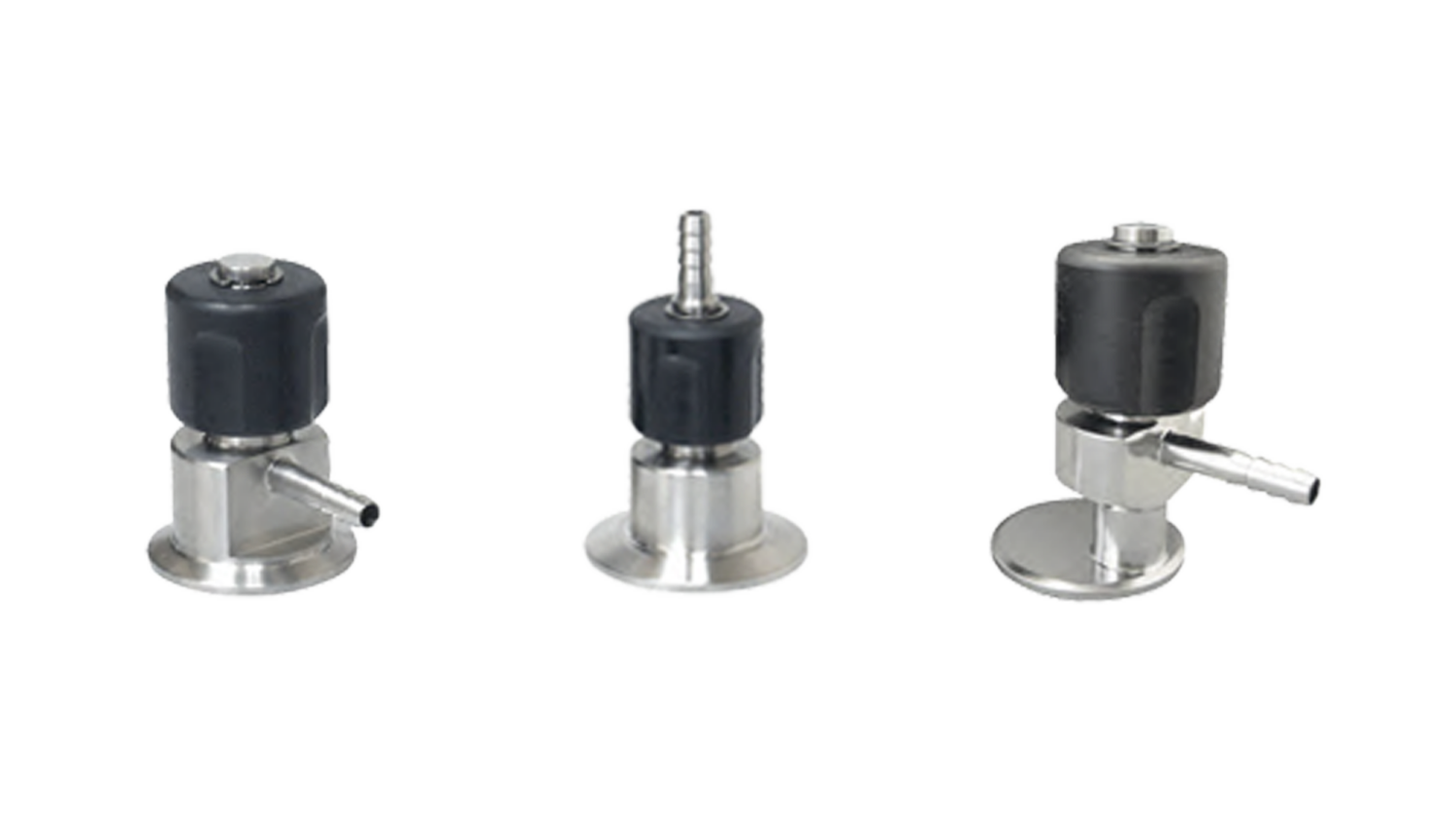
In sanitary processing environments, accurate product sampling is critical to maintaining product quality, consistency, and safety. Whether in pharmaceutical production, food processing, brewing, or dairy applications, sample valves play an essential role in validating process integrity at every stage of production.
Choosing the right sample valve helps ensure reliable sampling while supporting cleanability, drainability, and overall process efficiency.
Why Are Sample Valves Important?
Process samples are collected throughout production to verify:
- Product quality
- Taste and consistency
- Sterility
- Ingredient validation
- Batch integrity
- Regulatory compliance
Industries that commonly rely on sanitary sample valves include:
- Pharmaceutical
- Biotech
- Food processing
- Beverage production
- Dairy
- Breweries
- Wineries
Because sampling points come into direct contact with process media, valve design is extremely important. Improper valve selection can lead to contamination risks, inaccurate samples, or product hold-up within the valve body.
The Importance of Minimal Dead-Leg Design
TOP-FLO® SV2 Sample Valves are engineered with minimal dead-leg areas to reduce internal hold-up volume and improve sample accuracy. Minimizing trapped product helps maintain sanitary conditions while delivering more representative process samples.
This design approach is especially important in hygienic and high-purity applications where cleanability and repeatability are critical.
Understanding the Different Types of Sample Valves
Selecting the right sample valve depends on your system layout, installation requirements, and application goals. TOP-FLO® offers several configurations designed for specific process conditions.
SV2 Right Angle Concentric Sample Valve
The SV2 Right Angle Concentric Sample Valve is the most commonly used configuration. In this design, the valve body is centered within the inlet connection while the discharge outlet exits at a 90° angle.
Typical applications include:
- Process sampling
- Venting
- Draining
Its versatile design makes it suitable for a wide range of sanitary processing systems.
EV2 Right Angle Eccentric Sample Valve
The EV2 Right Angle Eccentric Sample Valve is specifically designed to improve drainability in horizontal piping systems. Unlike the concentric design, the valve body is positioned off-center along the outside edge of the inlet connection, while the discharge remains at a 90° angle.
This configuration helps reduce product pooling and is commonly used as:
- Bleed valves on transfer panels
- Drainable sampling points on horizontal process lines
For applications where complete drainage is critical, the eccentric design provides a major advantage.
IN2 In-Line Sample Valve
The IN2 In-Line Sample Valve features a concentric design with a straight-through 180° flow path. The valve body remains centered in the inlet connection, making it ideal for installations where available space is limited.
The IN2 model is commonly used for the same applications as the SV2, including:
- Sampling
- Venting
- Draining
Its compact footprint makes it an excellent option for tighter process layouts.
How to Choose the Right Sample Valve
When selecting a sanitary sample valve, consider:
- Process media characteristics
- Pipe orientation
- Drainability requirements
- Available installation space
- Sampling frequency
- Cleanability and hygienic design standards
The proper valve configuration can improve sample accuracy, simplify maintenance, and help support long-term process reliability. Steel & O’Brien offers sanitary sample valves designed for hygienic performance across pharmaceutical, biotech, food, beverage, dairy, brewery, and winery applications. With multiple configurations available, our team can help identify the best sampling solution for your process requirements.