304 vs 316L Stainless Steel in Sanitary Systems
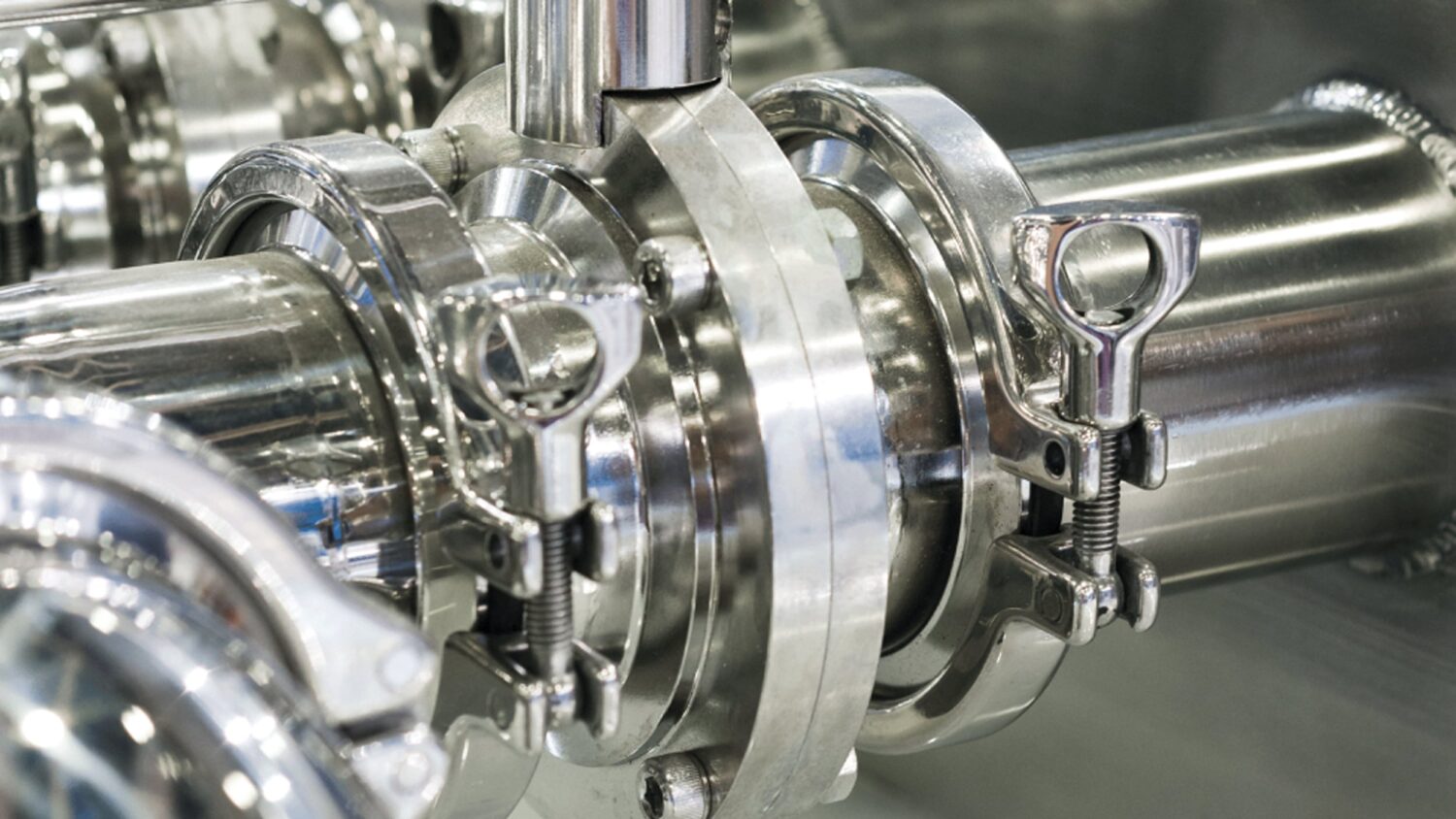
304 and 316L stainless steel are the most common materials used in sanitary processing equipment.
- 304 stainless steel is widely used in food, beverage, and dairy systems because it offers strong corrosion resistance and cost efficiency.
- 316L stainless steel contains added molybdenum and lower carbon content, providing superior corrosion resistance and improved weld performance, making it ideal for pharmaceutical, biotech, and high-purity processing environments.
Most sanitary equipment uses 304 for general processing and 316L where higher corrosion resistance or regulatory requirements exist.
What Is Stainless Steel in Sanitary Processing?
Sanitary processing equipment must be manufactured from materials that resist corrosion, maintain smooth surfaces, and withstand repeated clean-in-place (CIP) and steam-in-place (SIP) cycles.
Stainless steel is the industry standard because it offers:
- Corrosion resistance
- Hygienic surfaces
- Mechanical strength
- Compatibility with cleaning chemicals
- Long service life
When comparing stainless steel 304 vs 316 strength, both grades provide excellent mechanical strength for sanitary processing applications.
What Is 304 Stainless Steel?
304 stainless steel is an austenitic stainless steel alloy composed primarily of:
- Chromium
- Nickel
- Iron
This composition creates a protective passive oxide layer that prevents corrosion.
Typical Uses of 304 Stainless Steel
304 is widely used in sanitary processing systems such as:
- food production equipment
- dairy processing systems
- beverage manufacturing lines
- sanitary fittings and tubing
- pumps and valves
Because it balances performance and cost, 304 is often the default material for hygienic equipment.
Advantages of 304 Stainless Steel
Key benefits include:
- Strong corrosion resistance in most food environments
- Good formability and weldability
- Cost-effective manufacturing
- Widely available sanitary components
For many food and beverage applications, 304 provides reliable long-term performance.
What Is 316L Stainless Steel?
316L stainless steel is similar to 304 but includes molybdenum, which significantly improves corrosion resistance.
The "L" designation indicates low carbon content, which improves weld integrity and reduces carbide precipitation during welding.
Typical alloy additions include:
- Chromium
- Nickel
- Molybdenum
These elements provide enhanced resistance to chlorides, acids, and aggressive cleaning chemicals.
Advantages of 316L Stainless Steel
316L offers several important advantages in sanitary environments:
- Improved corrosion resistance
- Better performance in chloride-rich environments
- Higher resistance to chemical cleaning agents
- Reduced risk of weld corrosion
- Preferred material for high-purity systems
These properties make 316L a standard material in pharmaceutical and biotechnology processing systems.
304 vs 316L Stainless Steel Comparison
Comparing 304 vs 316L stainless steel properties helps engineers select the right material based on corrosion resistance, weldability, and application requirements.
| Property | 304 Stainless Steel | 316L Stainless Steel |
|---|---|---|
| Corrosion Resistance | Very good | Excellent |
| Molybdenum Content | None | Yes |
| Weld Performance | Good | Excellent |
| Chemical Resistance | Moderate | High |
| Typical Industries | Food & beverage | Pharma & biotech |
When comparing 316L vs 304 corrosion resistance, the addition of molybdenum in 316L significantly improves resistance to pitting corrosion and chemical attack.
When to Use 304 Stainless Steel
304 stainless steel is typically used when:
- processing environments are mild
- chloride exposure is limited
- standard food-grade equipment is required
- cost efficiency is important
Common applications include:
- sanitary tubing
- fittings and clamps
- valves
- pumps used in food production
For most food processing systems, 304 provides excellent performance and durability.
When to Use 316L Stainless Steel
316L stainless steel is preferred when:
- equipment is exposed to aggressive cleaning chemicals
- chloride concentrations are high
- corrosion risk must be minimized
- pharmaceutical or biotech regulations apply
Common applications include:
- ASME-BPE fittings
- pharmaceutical process tubing
- diaphragm valves
- sterile process equipment
Many high-purity systems require 316L to meet regulatory and validation standards.
Surface Finish Considerations
Material selection often works together with surface finish requirements. While 304 vs 316 stainless steel appearance is nearly identical, the decision is usually based on performance rather than visual differences.
High-purity systems frequently specify:
- 20 Ra mechanical polish
- 15 Ra electropolished finishes
These finishes improve:
- cleanability
- microbial resistance
- corrosion performance
316L stainless steel is often chosen when electropolished surfaces are required.
Stainless Steel and Regulatory Standards
Sanitary equipment materials must comply with industry standards.
Common standards include:
- 3-A Sanitary Standards for food and dairy equipment
- ASME-BPE for pharmaceutical and biotech piping systems
- FDA regulations for food-contact materials
Both 304 and 316L can meet sanitary requirements, but 316L is more commonly specified for high-purity environments.
Equipment Commonly Made from 304 or 316L
Sanitary systems include many stainless steel components, such as:
- sanitary fittings
- process tubing
- hygienic valves and actuators
- centrifugal pumps
- diaphragm valves
- strainers and filters
Material selection depends on process conditions, regulatory requirements, and corrosion exposure.
Best Practices for Material Selection
When choosing between 304 and 316L stainless steel, engineers should consider:
Process Environment
Evaluate exposure to chlorides, acids, and cleaning chemicals.
Cleaning Systems
Frequent CIP and SIP cycles may favor 316L.
Regulatory Requirements
Pharmaceutical and biotech industries typically require 316L.
Cost Considerations
304 stainless steel is generally more economical. The price difference between stainless steel 304 and 316L reflects the added molybdenum content and enhanced corrosion resistance offered by 316L.
Selecting the correct material ensures long-term reliability and hygienic performance.
FAQ: 304 vs 316L Stainless Steel
What is the main difference between 304 and 316L stainless steel?
316L contains molybdenum and has lower carbon content, which improves corrosion resistance and weld performance compared with 304 stainless steel.
Stainless steel 304 vs 316L: Which is better?
316L performs better in corrosive or high-purity environments, but 304 is often sufficient and more cost-effective for many food processing applications.
Why is 316L used in pharmaceutical equipment?
316L provides superior corrosion resistance and weld integrity, which helps maintain sterile conditions and meet regulatory standards in pharmaceutical manufacturing.
Can 304 stainless steel be used in sanitary systems?
Yes. 304 stainless steel is widely used in food, beverage, and dairy processing equipment and meets most sanitary requirements.
Is 304 or 316L stainless steel stronger?
Both grades offer excellent mechanical strength for sanitary processing equipment. In most applications, the decision between 304 and 316L is based more on corrosion resistance and chemical exposure than on strength.
Summary
304 and 316L stainless steel are the two most common materials used in sanitary processing systems.
- 304 stainless steel provides reliable corrosion resistance and cost-effective performance for food and beverage equipment.
- 316L stainless steel offers enhanced corrosion resistance and weld performance, making it ideal for pharmaceutical and high-purity applications.
Choosing the correct material helps ensure cleanability, durability, and compliance with sanitary standards.
This article is part of the Steel & O'Brien Product Knowledge Hub, designed to help engineers and operators understand sanitary equipment materials and make informed purchasing decisions.