
Product Knowledge Hub

Expert resources, guides, and insights about our products, technology, and industry.

What You’ll Find in the Steel & O’Brien Product Knowledge Hub

Selecting sanitary and high-purity process equipment requires more than choosing a component from a catalog. Material, surface finish, valve function, cleanability, fabrication requirements, and industry standards can all affect system performance and compliance.

The Steel & O’Brien Product Knowledge Hub provides practical guides to help engineers, maintenance teams, process designers and purchasing professionals make informed decisions about sanitary fittings, valves, pumps and high-purity process equipment.

Explore guides covering sanitary valve selection, ASME BPE and sanitary fittings, stainless steel materials, surface finishes, CIP and SIP, material traceability, and other important considerations for hygienic and high-purity processing systems.
ASME-BPE vs. Sanitary Fittings: A Complete Selection Guide

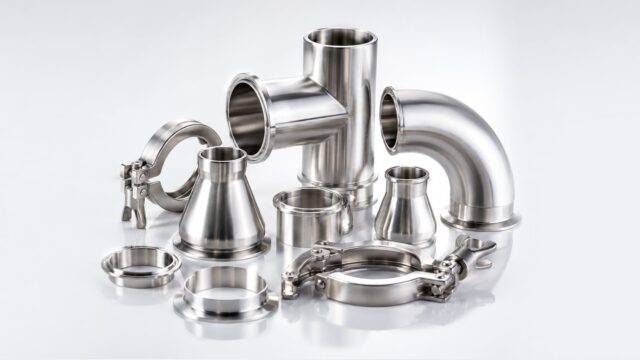
Choosing between ASME-BPE fittings and standard sanitary fittings is a critical decision in hygienic process system design. While both are used in clean, corrosion-resistant piping systems, they serve different regulatory, operational, and validation requirements. This guide explains the differences between ASME-BPE fittings and sanitary fittings, when each should be used, how ASME BPE standards apply, ... ASME-BPE vs. Sanitary Fittings: A Complete Selection Guide

How to Choose the Right Sanitary Valve for Your Process 

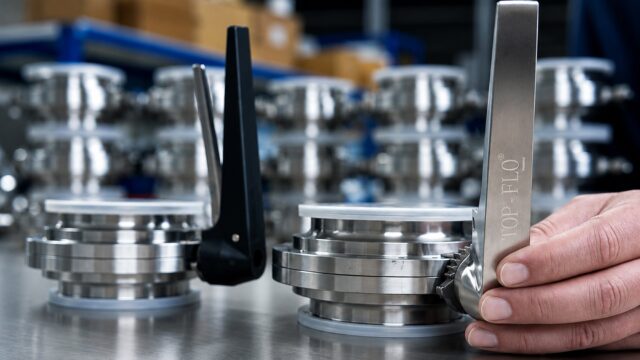
How Do You Select the Right Sanitary Valve? Choose a sanitary valve based on five core factors: flow function (on/off, throttling, or backflow prevention), product characteristics (viscosity, particulates, sterility), cleanability requirements (CIP/SIP and surface finish), pressure and temperature ratings, and regulatory compliance standards. Butterfly valves are common for isolation, ball valves provide tight shutoff, diaphragm ... How to Choose the Right Sanitary Valve for Your Process 

Surface Finish Explained: 32Ra vs 20Ra vs Electropolish

Surface finish in sanitary stainless-steel equipment refers to the microscopic smoothness of the metal surface. It is typically measured in surface finish microinches using Ra (roughness average). 32 Ra is the standard finish for most food, beverage, and dairy processing equipment. 20 Ra provides a smoother surface that improves cleanability and reduces product adhesion. Electropolished ... Surface Finish Explained: 32Ra vs 20Ra vs Electropolish

304 vs 316L Stainless Steel in Sanitary Systems

304 and 316L stainless steel are the most common materials used in sanitary processing equipment. 304 stainless steel is widely used in food, beverage, and dairy systems because it offers strong corrosion resistance and cost efficiency. 316L stainless steel contains added molybdenum and lower carbon content, providing superior corrosion resistance and improved weld performance, making ... 304 vs 316L Stainless Steel in Sanitary Systems

CIP vs SIP: Design Considerations for Sanitary Equipment

Clean-in-Place (CIP) and Steam-in-Place (SIP) are cleaning and sterilization methods used in sanitary processing systems. CIP removes product residue using circulating cleaning solutions without disassembling equipment. SIP sterilizes equipment using pressurized steam to eliminate microorganisms. CIP focuses on cleaning, while SIP focuses on sterilization. Many pharmaceutical, biotech, and high-purity food systems use CIP followed by ... CIP vs SIP: Design Considerations for Sanitary Equipment

Material Traceability and Documentation in High-Purity Systems

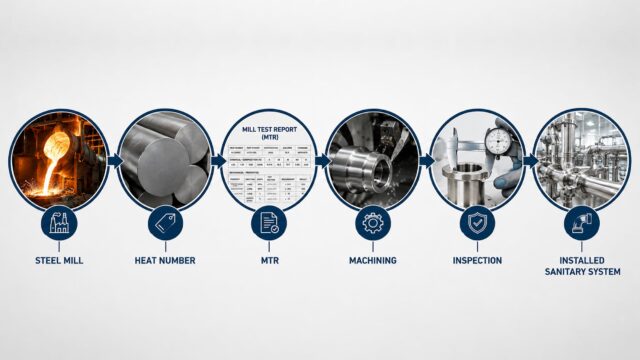
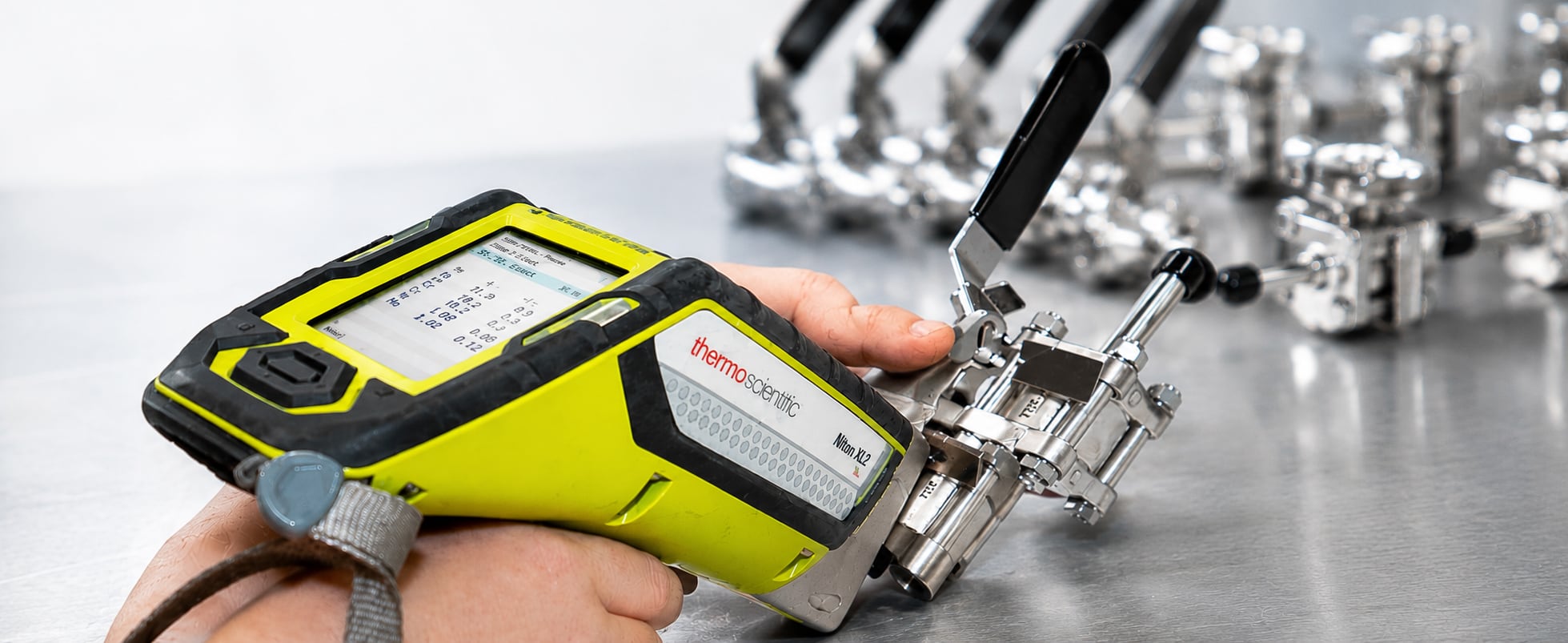
Material traceability ensures every component used in a high-purity processing system can be traced back to its original material source and manufacturing records. Traceability documentation typically includes: Mill Test Reports (MTRs) verifying material composition Heat numbers linking parts to steel production batches Material certificates confirming compliance with industry standards Weld and inspection records documenting fabrication ... Material Traceability and Documentation in High-Purity Systems