
Material Traceability and Documentation in High-Purity Systems
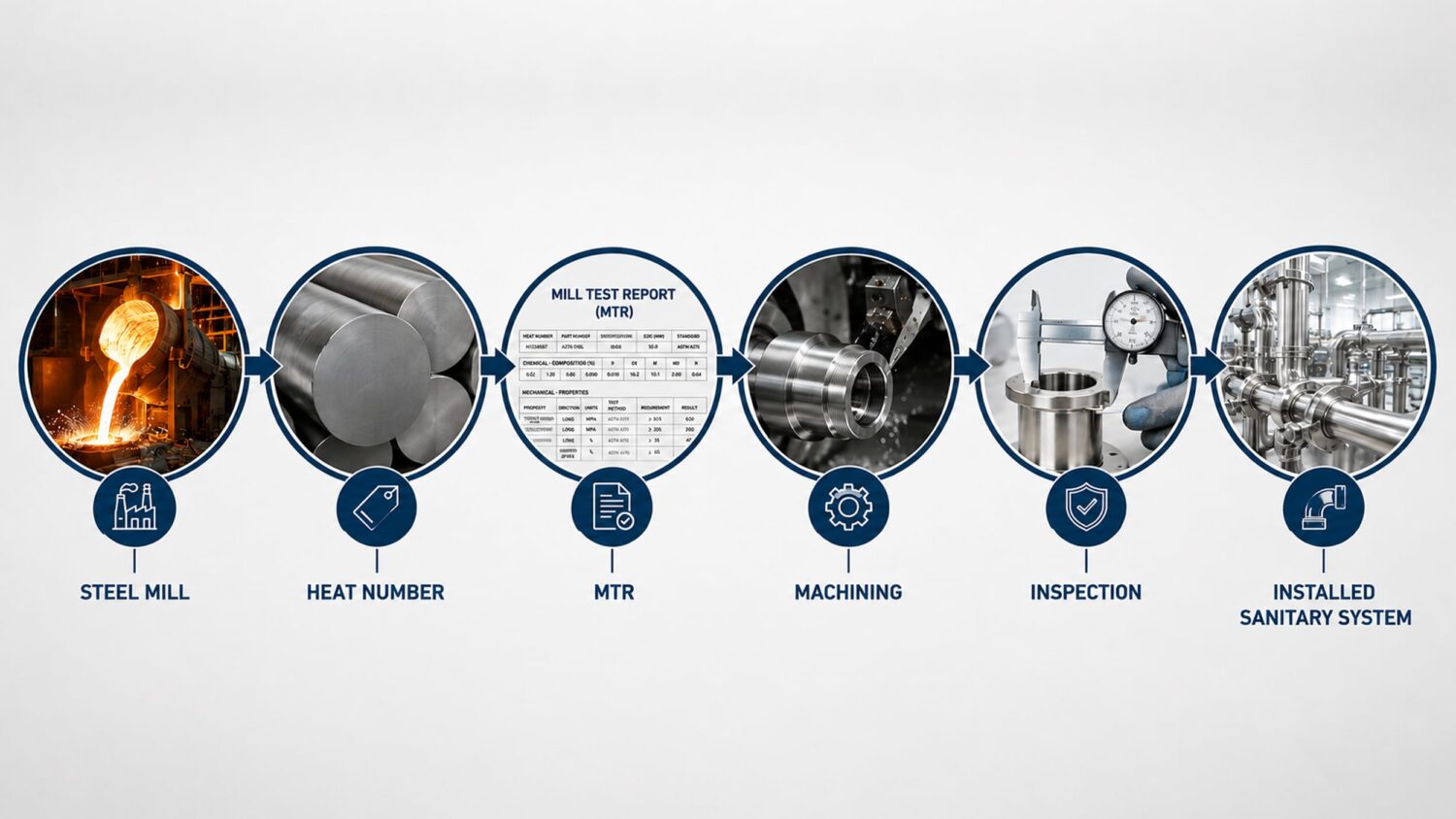
Material traceability ensures every component used in a high-purity processing system can be traced back to its original material source and manufacturing records.
Traceability documentation typically includes:
- Mill Test Reports (MTRs) verifying material composition
- Heat numbers linking parts to steel production batches
- Material certificates confirming compliance with industry standards
- Weld and inspection records documenting fabrication processes
In pharmaceutical, biotechnology, and other high-purity systems, traceability helps verify material integrity, regulatory compliance, and product safety.
What Is Material Traceability?
Material traceability in manufacturing is the ability to track a component's material origin, manufacturing process, and certification history throughout the supply chain.
In high-purity processing systems, traceability ensures that all product-contact components meet strict requirements for:
- chemical composition
- corrosion resistance
- sanitary performance
- regulatory compliance
Traceability records allow engineers and auditors to confirm that system materials match approved specifications.
Why Traceability Matters in High-Purity Systems
High-purity manufacturing environments require complete documentation of materials used in process equipment.
Industries that rely heavily on traceability include:
- pharmaceutical manufacturing
- biotechnology processing
- injectable drug production
- nutraceutical manufacturing
- specialty food production
Traceability helps ensure that materials used in these environments maintain consistent quality, safety, and compliance with regulatory standards.
Key Elements of Material Traceability
Several types of documentation support traceability in sanitary processing systems.
Heat Numbers
A heat number is the foundation of material heat number traceability, identifying the specific batch of metal produced by a steel mill.
Each heat number links a component to its original manufacturing run, allowing verification of:
- alloy composition
- metallurgical properties
- production conditions
Heat numbers are typically stamped or documented for stainless steel tubing, fittings, and components.
Mill Test Reports (MTRs)
A Mill Test Report (MTR) provides certification from the steel manufacturer confirming that a material meets specified chemical and mechanical properties.
An MTR typically includes:
- alloy composition percentages
- mechanical properties
- heat number identification
- testing standards used during manufacturing
MTRs confirm that materials such as 304 or 316L stainless steel meet required specifications.
Material Certificates
Material certificates provide documentation verifying that components comply with applicable industry standards.
These certificates often reference:
- material grade
- production standards
- regulatory compliance requirements
Material certificates are often required for equipment used in pharmaceutical and biotechnology applications.
Weld Documentation
Fabrication processes must also be documented in high-purity systems.
Weld documentation may include:
- weld procedure specifications
- welder qualifications
- inspection results
- weld identification records
Proper documentation ensures welds meet hygienic and structural standards.
Traceability in Sanitary Equipment
Many types of sanitary processing components require traceability documentation.
Common examples include:
- stainless steel tubing
- sanitary fittings
- hygienic valves
- diaphragm valves
- pumps
- tanks and vessels
Traceability ensures that each component installed in a system can be verified and validated.
Standards That Require Traceability
Several material traceability standards require or strongly encourage complete material traceability throughout the manufacturing process.
Common standards include:
ASME BPE
ASME BPE (Bioprocessing Equipment) standards provide guidance for equipment used in pharmaceutical and biotechnology systems.
These standards emphasize documentation for:
- materials
- surface finishes
- welding
- inspection procedures
FDA Regulations
In regulated manufacturing environments, documentation supports compliance with FDA requirements for:
- product safety
- contamination control
- equipment validation
Traceability records help demonstrate that materials meet approved specifications.
GMP Requirements
Good Manufacturing Practice (GMP) regulations require facilities to maintain documentation supporting equipment qualification and material integrity.
Traceability documentation helps confirm that equipment used in production meets validated design standards.
Surface Finish Documentation
High-purity systems often require documented surface finishes.
Typical specifications include:
| Surface Finish | Typical Application |
|---|---|
| 32 Ra | Food and beverage equipment |
| 20 Ra | Enhanced sanitary systems |
| 15 Ra electropolished | Pharmaceutical and biotech systems |
Surface finish documentation helps verify that components meet hygienic design requirements.
Benefits of Material Traceability
Maintaining complete traceability documentation provides several advantages and demonstrates the benefits of traceability in manufacturing, including:
Regulatory Compliance
Supports inspections and audits by regulatory authorities.
Product Safety
Helps ensure equipment materials do not introduce contaminants.
Quality Assurance
Confirms that system components meet specified material requirements.
Faster Problem Resolution
Traceability allows manufacturers to quickly identify and isolate material issues if problems occur.
Documentation Best Practices
Organizations operating high-purity processing systems should implement several best practices.
Maintain Centralized Records
All documentation should be stored in an organized system for easy access during audits.
Verify Supplier Documentation
Material certifications should be verified before components enter production systems.
Label Components Clearly
Heat numbers and identification marks should remain visible whenever possible.
Keep Fabrication Records
Welding and inspection documentation should be retained for the life of the equipment.
These practices support long-term compliance and operational reliability.
Equipment Designed for Traceability
Sanitary equipment manufacturers often provide documentation packages with their products.
Typical documentation may include:
- material certificates
- mill test reports
- weld inspection records
- surface finish verification
- compliance documentation
These records help end users maintain complete system documentation.
FAQ: Material Traceability
What is material traceability in sanitary systems?
Material traceability is the ability to track the origin and certification of materials used in sanitary equipment through documentation such as mill test reports and heat numbers.
What is a Mill Test Report?
A Mill Test Report (MTR) is a document from a steel manufacturer confirming the chemical composition and mechanical properties of a material batch.
Why are heat numbers important?
Heat numbers allow engineers to trace components back to the specific steel production batch used to manufacture them.
Which industries require material traceability?
Traceability is commonly required in pharmaceutical, biotechnology, and other high-purity processing industries.
Summary
Material traceability is a critical part of high-purity processing system design and validation.
Documentation such as mill test reports, heat numbers, material certificates, and weld records allows engineers and regulators to verify that sanitary equipment meets strict industry standards.
Maintaining complete traceability records helps ensure regulatory compliance, product safety, and long-term equipment reliability.
This article is part of the Steel & O'Brien Product Knowledge Hub, created to help engineers and operators better understand sanitary processing equipment, materials, and system design.