
ASME-BPE vs. Sanitary Fittings: A Complete Selection Guide
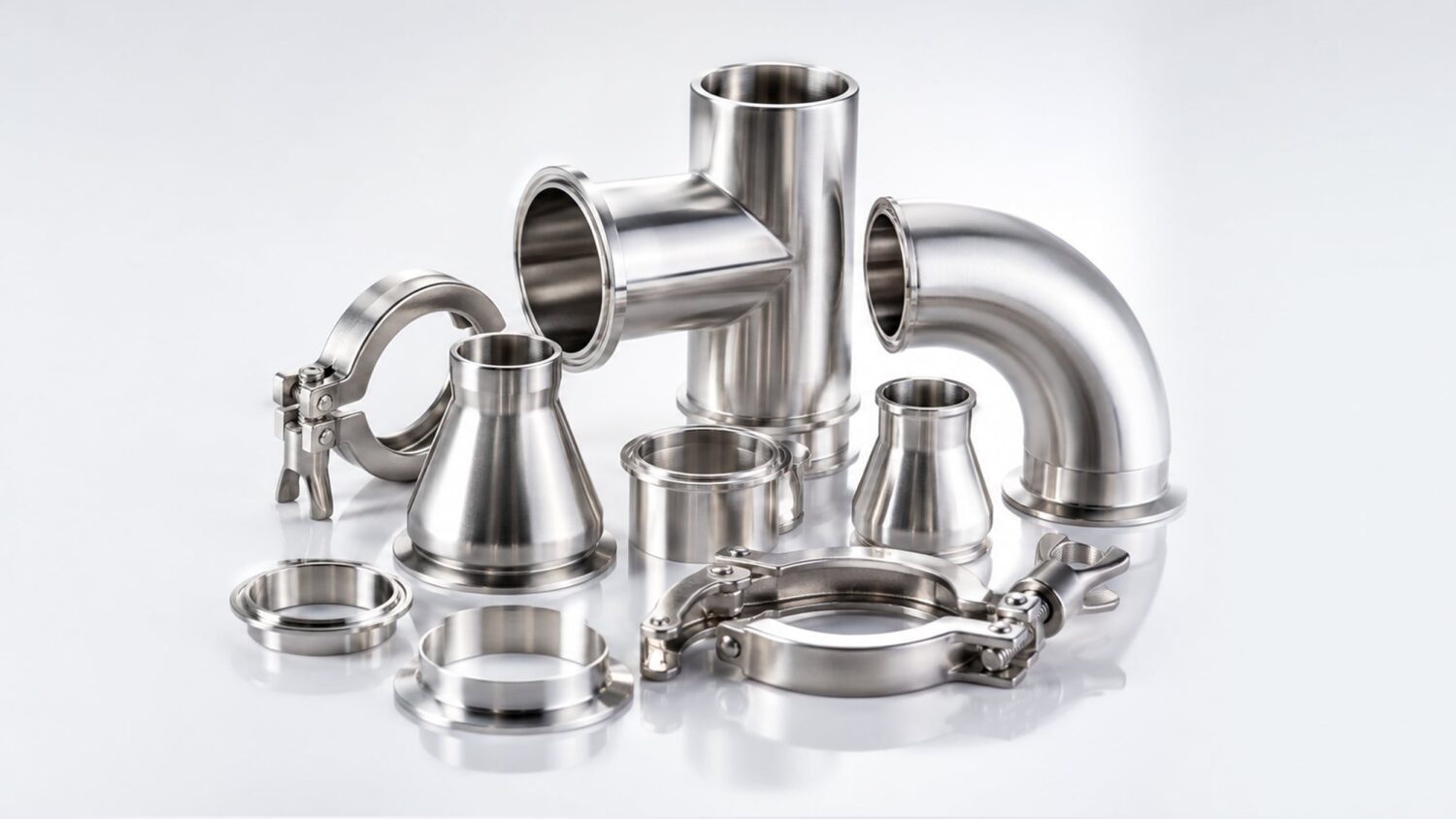
Choosing between ASME-BPE fittings and standard sanitary fittings is a critical decision in hygienic process system design. While both are used in clean, corrosion-resistant piping systems, they serve different regulatory, operational, and validation requirements.
This guide explains the differences between ASME-BPE fittings and sanitary fittings, when each should be used, how ASME BPE standards apply, and how to select the correct option for food, beverage, pharmaceutical, biotech, and high-purity applications.
What Are Sanitary Fittings?
Sanitary fittings are stainless steel components used to connect piping and equipment in hygienic processing systems. They are designed to minimize crevices, support clean-in-place (CIP) and steam-in-place (SIP) procedures, and meet food-grade and hygienic standards.
Sanitary fittings are commonly used in:
- Food and beverage processing
- Dairy production
- Brewing and distilling
- Personal care and cosmetics
Common Sanitary Standards
Sanitary fittings may comply with:
- 3-A Sanitary Standards
- FDA CFR 21 material requirements
- ASTM A270 tubing standards
Surface finishes typically range from 32Ra for standard hygienic service to finer finishes for specialty applications.
What Are ASME-BPE Fittings?
ASME-BPE fittings are engineered specifically for high-purity and aseptic applications where validation, documentation, and repeatable cleanability are required.
ASME-BPE (BioProcessing Equipment) standards define:
- Tighter dimensional tolerances
- Controlled surface finish requirements
- Enhanced weld quality expectations
- Mandatory documentation and traceability
BPE fittings are most commonly used in:
- Pharmaceutical manufacturing
- Biotech and life sciences
- Cell and gene therapy facilities
- Critical utilities such as WFI and clean steam
Key Differences Between ASME-BPE and Sanitary Fittings
| Feature | Sanitary Fittings | ASME-BPE Fittings |
|---|---|---|
| Primary Use | Food, beverage, dairy | Pharma, biotech, high purity |
| Governing Standard | 3-A, FDA | ASME-BPE |
| Surface Finish | Typically 32Ra | SF1 (20Ra), SF4 (15Ra EP) |
| Tolerances | Industry standard | Tighter, controlled |
| Material Traceability | Optional | Standard / Required |
| Documentation | Limited | Full validation packages |
| Welding Requirements | Manual or orbital | Orbital weld optimized |
Surface Finish Requirements Explained
Surface finish directly impacts cleanability, corrosion resistance, and validation.
- 32Ra: Common for food and beverage applications
- 20Ra (SF1): High-purity applications with increased cleanability requirements
- 15Ra Electropolished (SF4): Pharmaceutical and biotech processes requiring minimal product adhesion and maximum corrosion resistance
ASME-BPE systems often require documented surface finish verification as part of installation qualification (IQ) and operational qualification (OQ).
Material Selection and Sulfur Content
Both sanitary and ASME-BPE fittings are typically manufactured from 316L stainless steel for corrosion resistance.
For ASME-BPE fittings, sulfur content is tightly controlled (commonly 0.005–0.017%) to ensure:
- Consistent orbital weld penetration
- Reduced weld defects
- Improved surface integrity
This level of control is not typically required for standard sanitary fittings.
Documentation and Validation Expectations
One of the most significant differences between sanitary and ASME-BPE fittings is documentation.
ASME-BPE fittings often include:
- Material Test Reports (MTRs)
- Heat number traceability
- Surface finish certifications
- Dimensional compliance documentation
These documents support validation protocols in regulated manufacturing environments.
How to Choose Between ASME-BPE and Sanitary Fittings
Choose sanitary fittings when:
- The application is food, beverage, or dairy
- Regulatory validation is not required
- Cost efficiency is a priority
Choose ASME-BPE fittings when:
- The process is pharmaceutical or biotech
- Validation and traceability are mandatory
- Orbital welding and surface finish control are required
Can ASME-BPE and Sanitary Fittings Be Mixed?
In general, mixing ASME-BPE and standard sanitary fittings within the same process line is not recommended for validated systems. Differences in surface finish, tolerances, and documentation can complicate qualification and inspection.
In non-validated or utility systems, mixing may be acceptable if dimensional compatibility and cleanability requirements are met.
How Steel & O'Brien Supports Both Standards
Steel & O'Brien manufactures both sanitary and ASME-BPE fittings, valves, tubing, and assemblies. Product offerings support:
- Multiple surface finish options
- Full material traceability
- Custom fabrication
- Documentation packages for regulated industries
This allows system designers to standardize suppliers while meeting diverse regulatory requirements.
Summary
Sanitary fittings and ASME-BPE fittings serve different but equally important roles in hygienic process systems. Understanding the differences ensures proper compliance, cleanability, and long-term system performance.
For food and beverage applications, standard sanitary fittings typically provide an efficient and compliant solution. For pharmaceutical and biotech manufacturing, ASME-BPE fittings are essential for validation and high-purity performance.
This article is part of the Steel & O'Brien Product Knowledge Hub, designed to support engineers, designers, and procurement teams with authoritative guidance on sanitary and high-purity process equipment.